
Breguet Continues To Defy Expectations Marking 225 Years Of The Tourbillon
The watchmaking house’s new tourbillon models push the envelope.
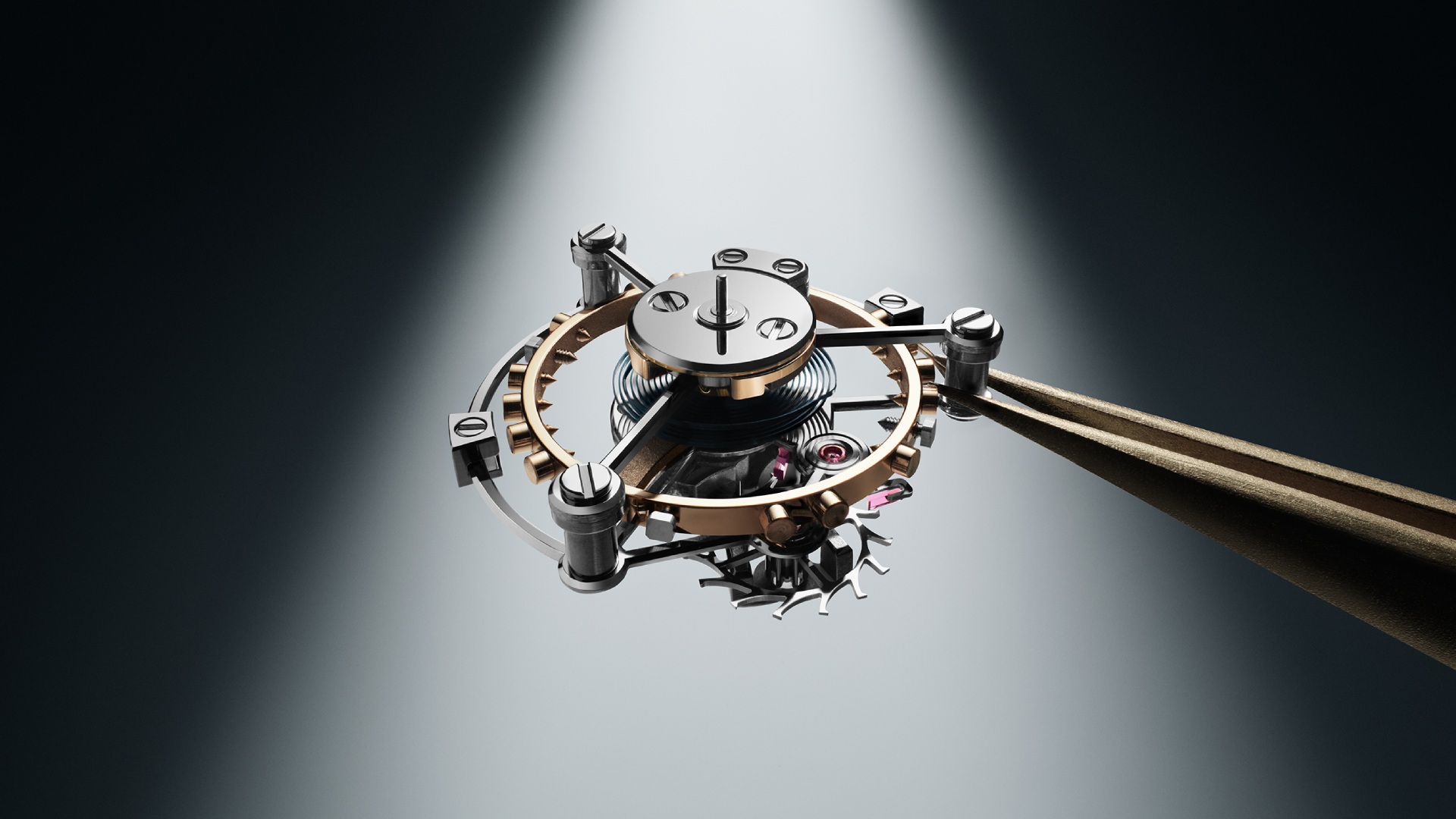
A tourbillon is a magic trick that explains itself. Look closely enough and you can watch the whole mechanism in action: a cage housing the very mechanical heartbeat of a watch—the escapement—rotating slowly, completing a cycle every 60-seconds in a intricate ballet of moving gears and springs.
There is no sleight of hand here, no hidden compartment. And yet few complications in watchmaking still manage to look like wonder even after you understand exactly how they work.
That is the tourbillon’s peculiar duality. It is, on one hand, pure theatre: a small orbiting stage set into the dial, built to be watched rather than merely worn. On the other, it is one of horology’s most exacting solutions to a stubborn problem that once plagued owners of pocket watches.
Gravity pulls unevenly on a watch’s regulating organs—an occurrence most pronounced with pocket watches that hanging vertically. This meant a timepiece could run faster in one position and slower in another.
Abraham-Louis Breguet’s answer was to stop fighting gravity and instead outmanoeuvre it: enclose the escapement and balance in a rotating cage, so that every position the watch might occupy is cycled through evenly, and the errors cancel each other out.
The result is not immunity from gravity so much as a kind of negotiated peace with it, achieved through motion rather than resistance.
The Mind Behind The Mechanism
The tourbillon was granted its patent on 26 June 1801. By then, Breguet had spent the years around the turn of the 19th century in a period of extraordinary output.
From that period came creations like the souscription watch, whose single-hand dial reset the aesthetic vocabulary of the craft, and the constant-force escapement, another attempt to smooth out the irregularities that plague mechanical timekeeping.

What set Breguet apart was not any single invention but the refusal to treat an invention as finished. He continued refining the tourbillon for the rest of his working life, and after his death in 1823, his son carried the work forward.
Manufacture Breguet, too, has followed the same instinct ever since, most visibly in 1989, when it revived the complication with the Classique Tourbillon 3350, the company’s first tourbillon wristwatch and the piece that returned the mechanism to relevance after decades on the margins of collector interest.
Marking A Milestone
For the 225th anniversary of the tourbillon’s invention, Breguet has chosen not to produce a single showpiece but to work the theme through several distinct registers, each drawing on a different corner of the company’s history.
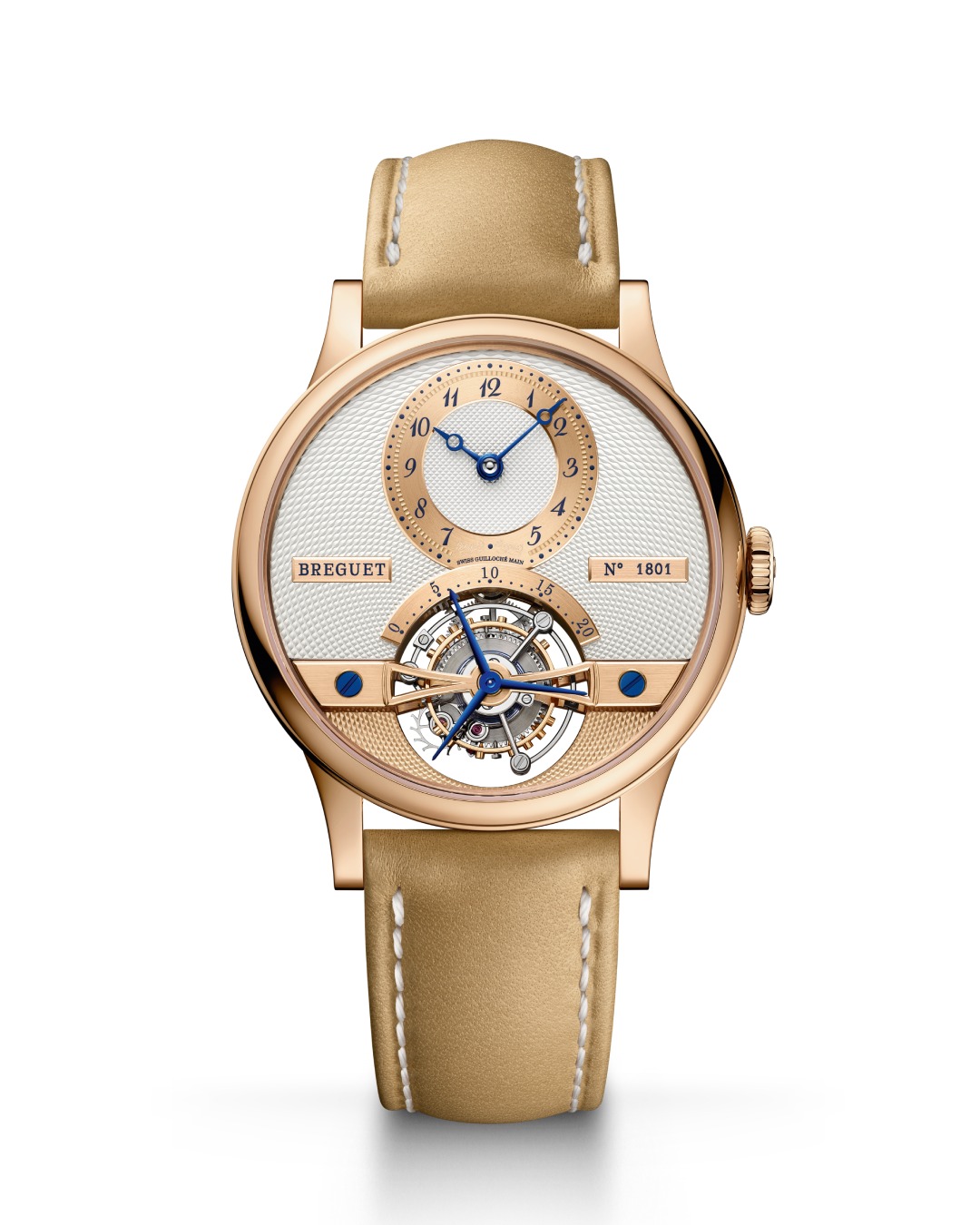
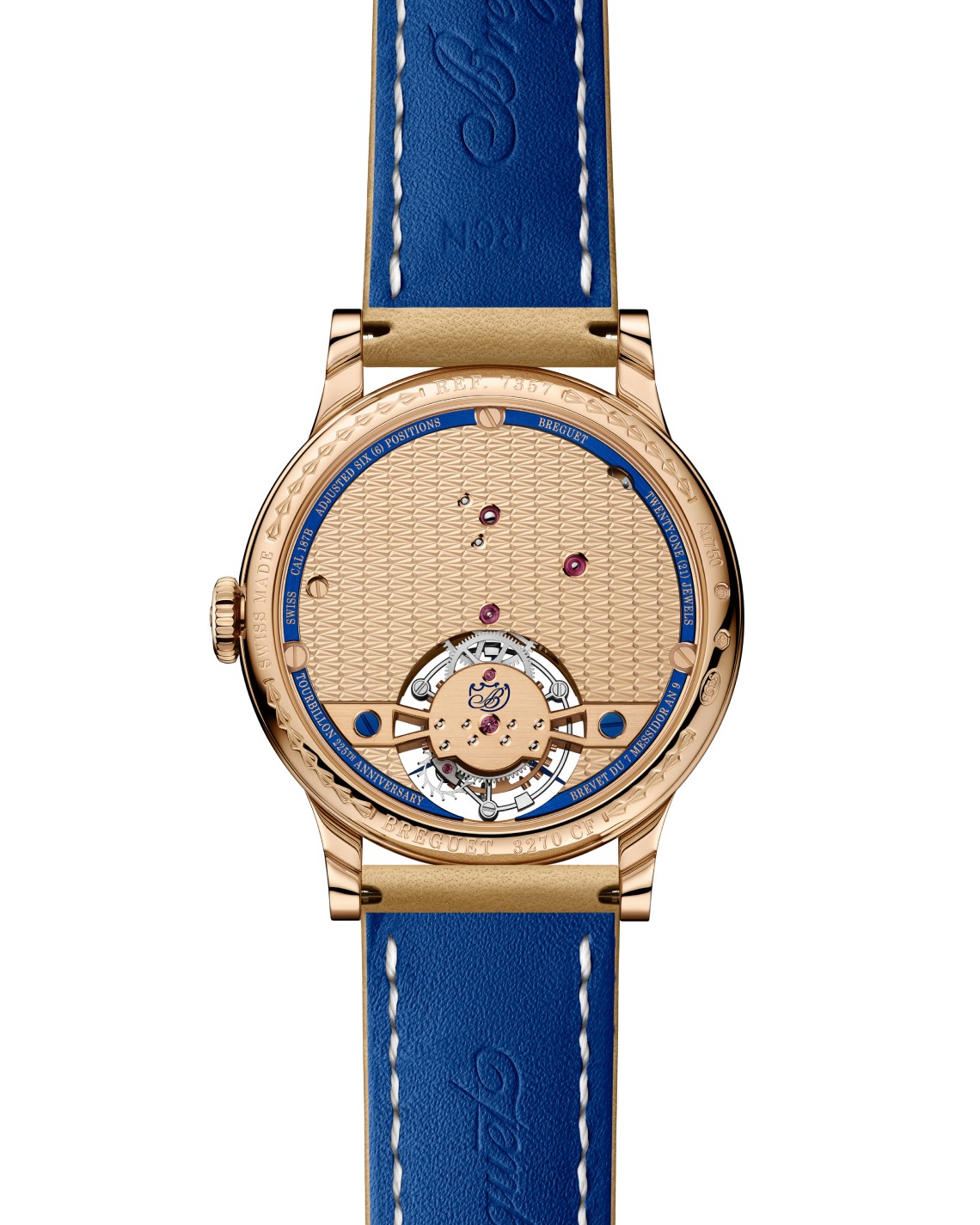
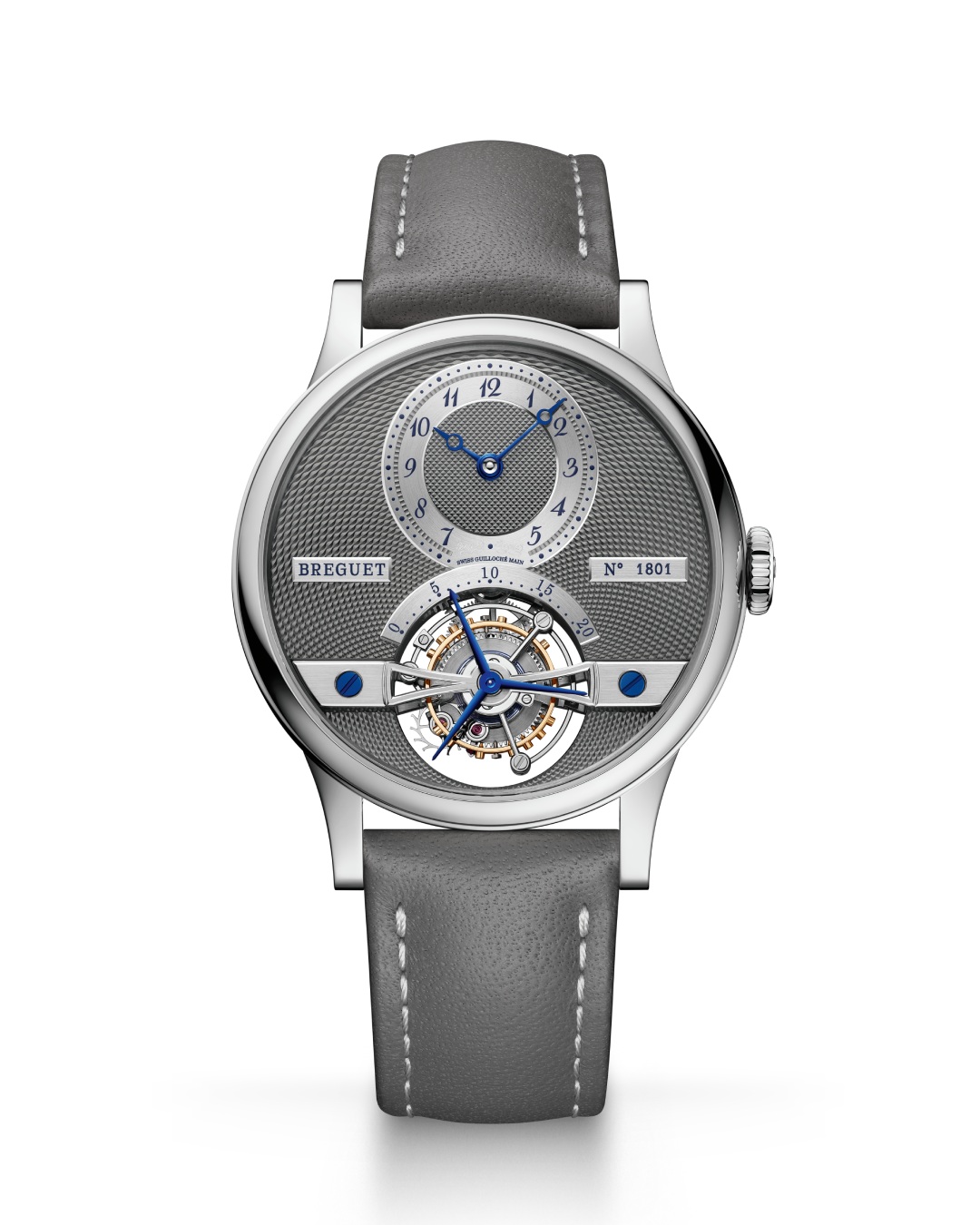
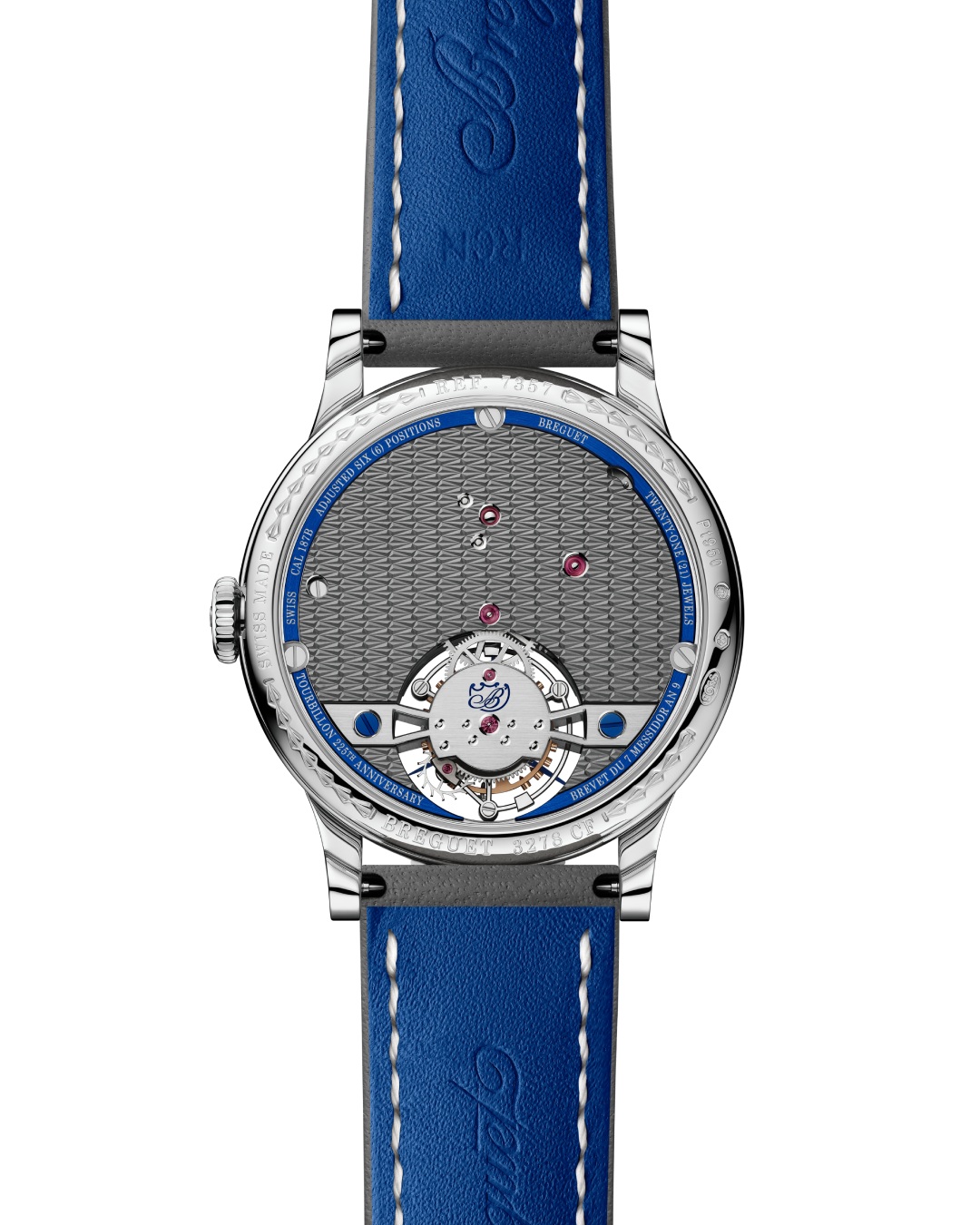
The Classique Tourbillon 7357 is the most direct descendant of that 1989 revival, built on an optimised version of the same Calibre 558 architecture, now designated Cal. 187B.
Available in platinum and in Breguet gold, it is a notably restrained watch: a 35mm case framing a dial that gives itself over almost entirely to the tourbillon at six o’clock, positioned fractionally below the surface to lend it a sense of depth. Meanwhile, blued gold hands and Breguet’s signature Arabic numerals complete the refined aesthetic.
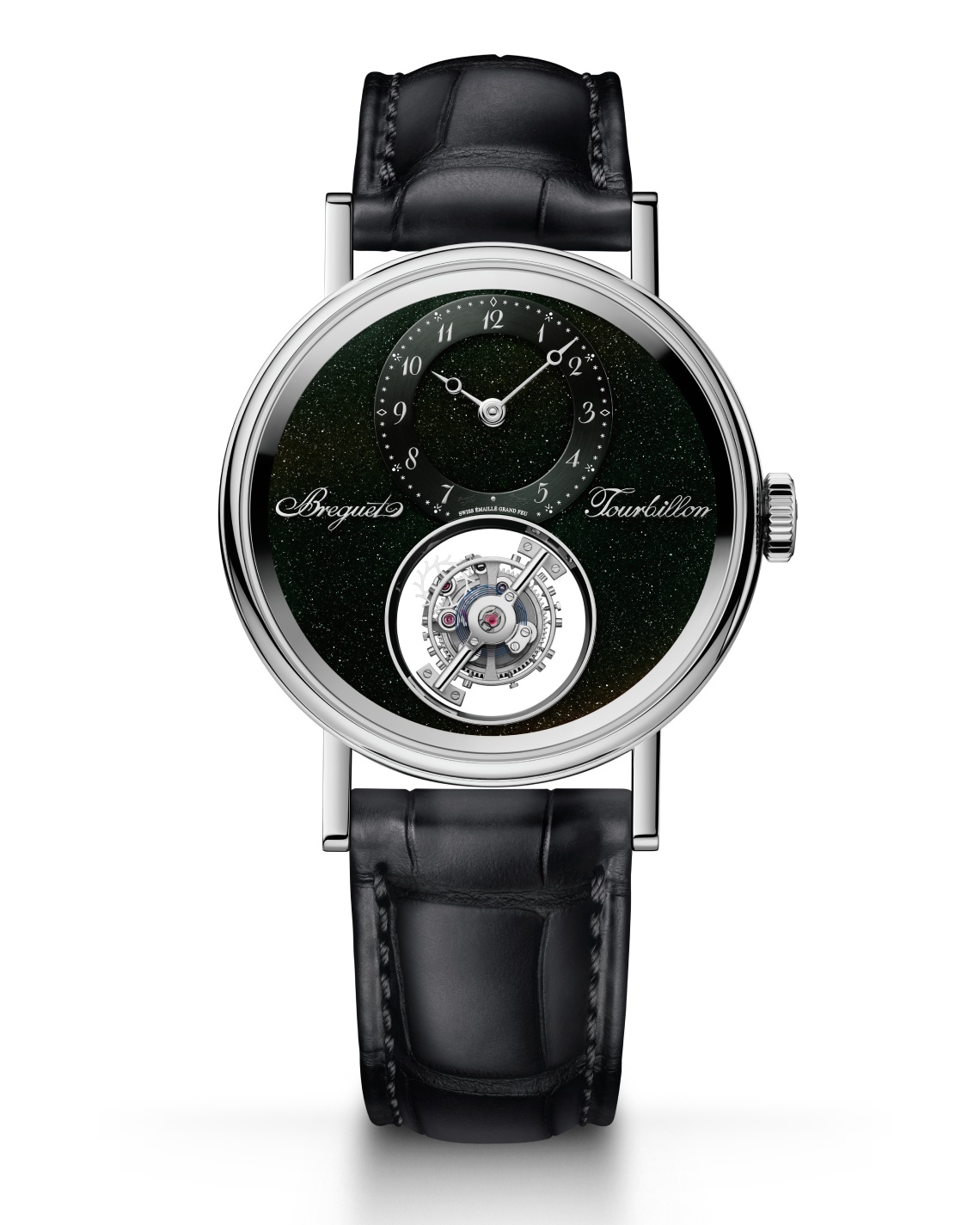
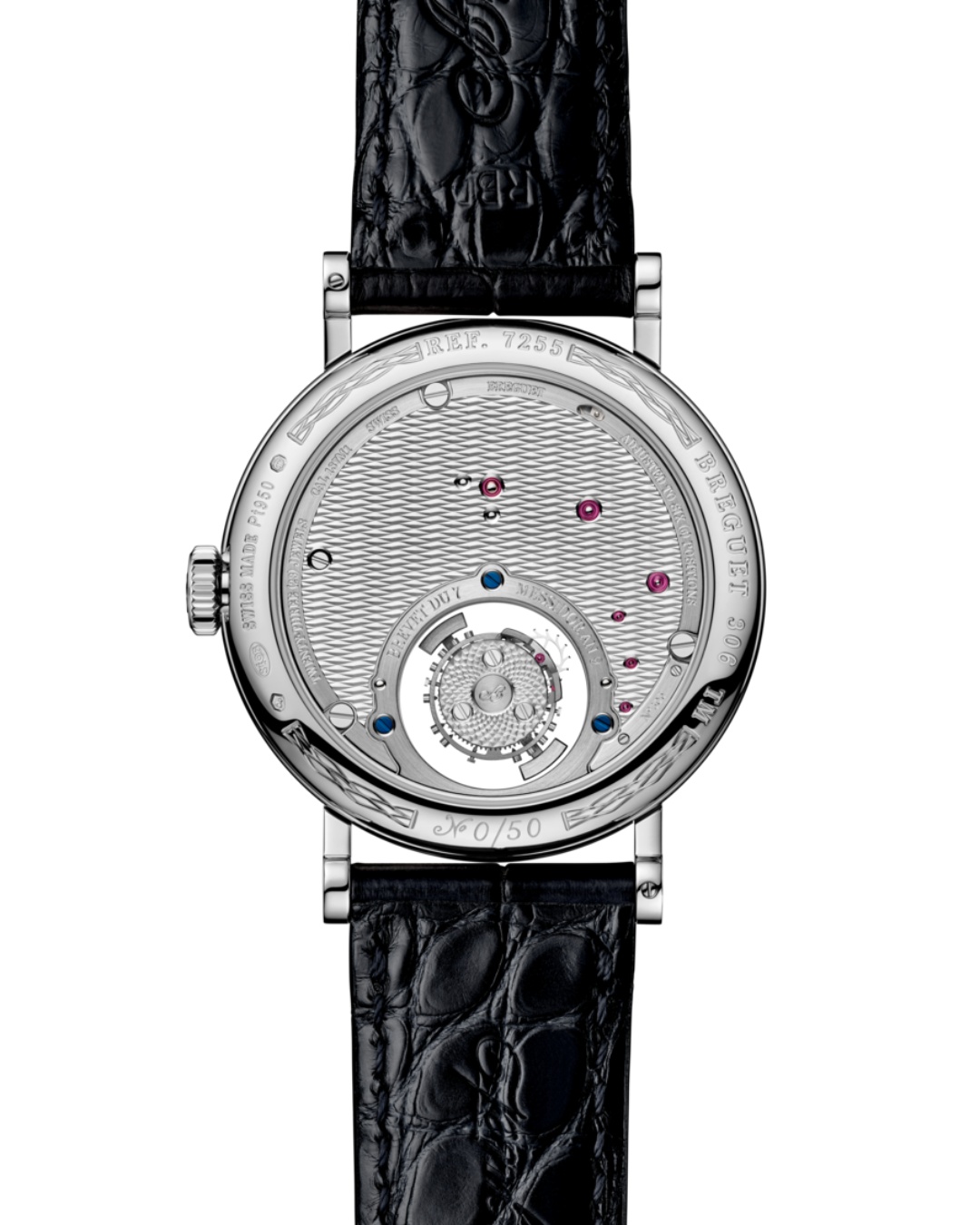
Taking a different route, the Classique Tourbillon Sidéral 7255 leans into spectacle. This is Breguet’s first flying tourbillon, its cage supported from below alone, which gives the complication the appearance of hovering unsupported above the movement.
Paired with a mysterious display, in which the cage appears to rotate with no visible connection to the gear train beneath it, and set against a black aventurine dial flecked with green, the 7255 reaches back to the founder’s own fascination with astronomy, a subject he studied formally and pursued through membership of the Académie des Sciences.
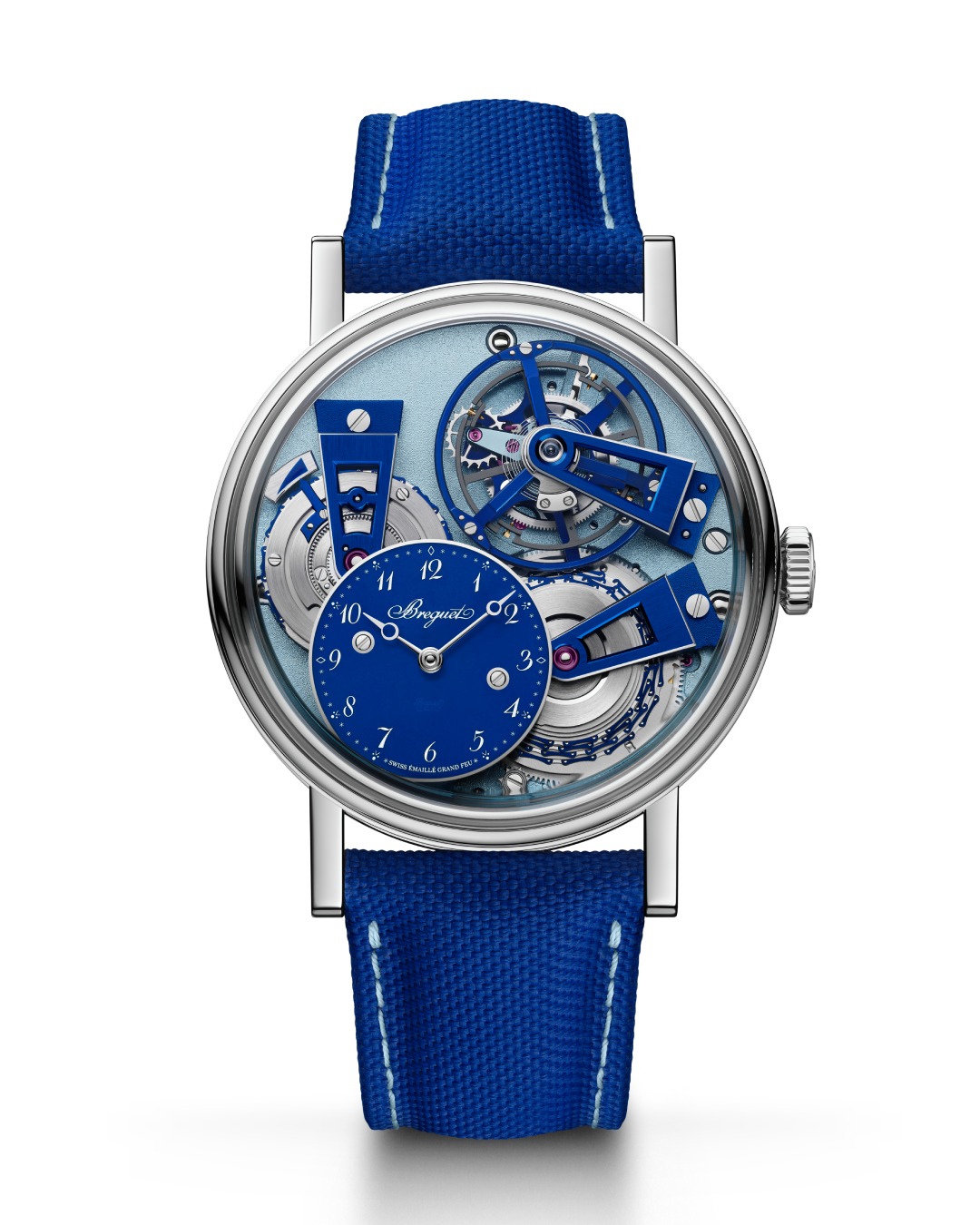
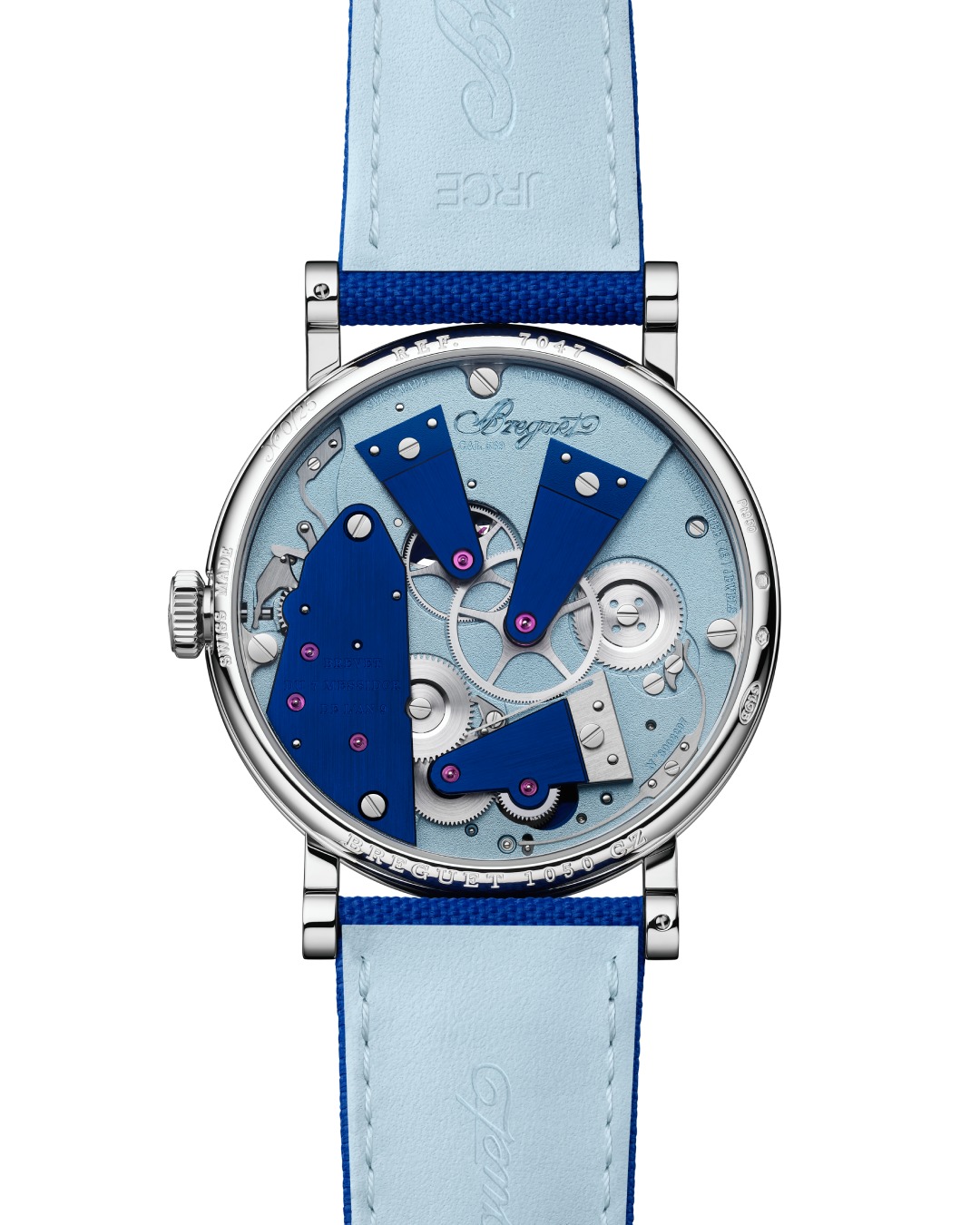
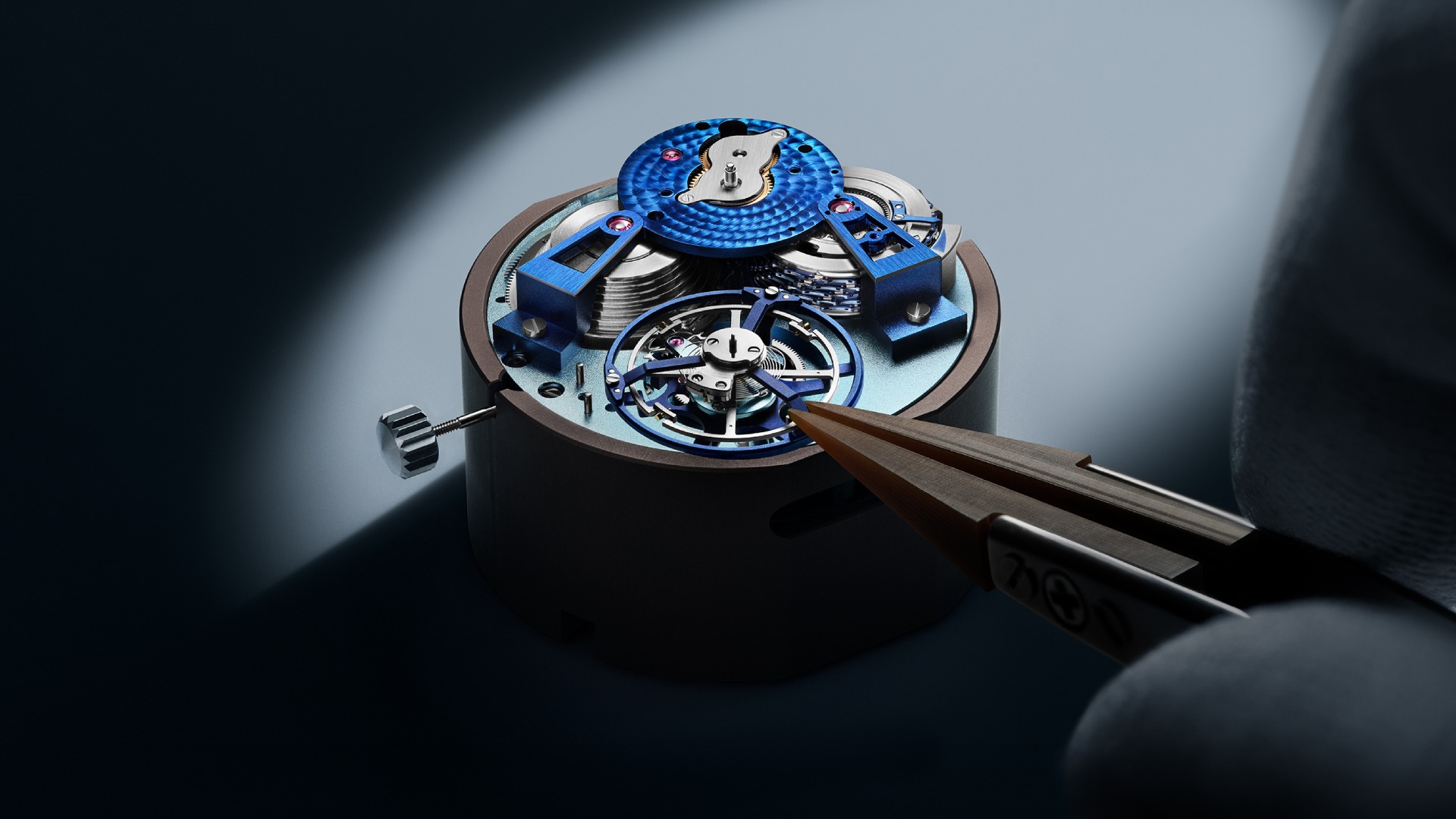
The Tradition Tourbillon 7047 takes the anniversary in a different direction again, pairing the tourbillon with a fusee-and-chain mechanism, a torque-regulating device adapted here to keep power delivery constant as the watch unwinds.
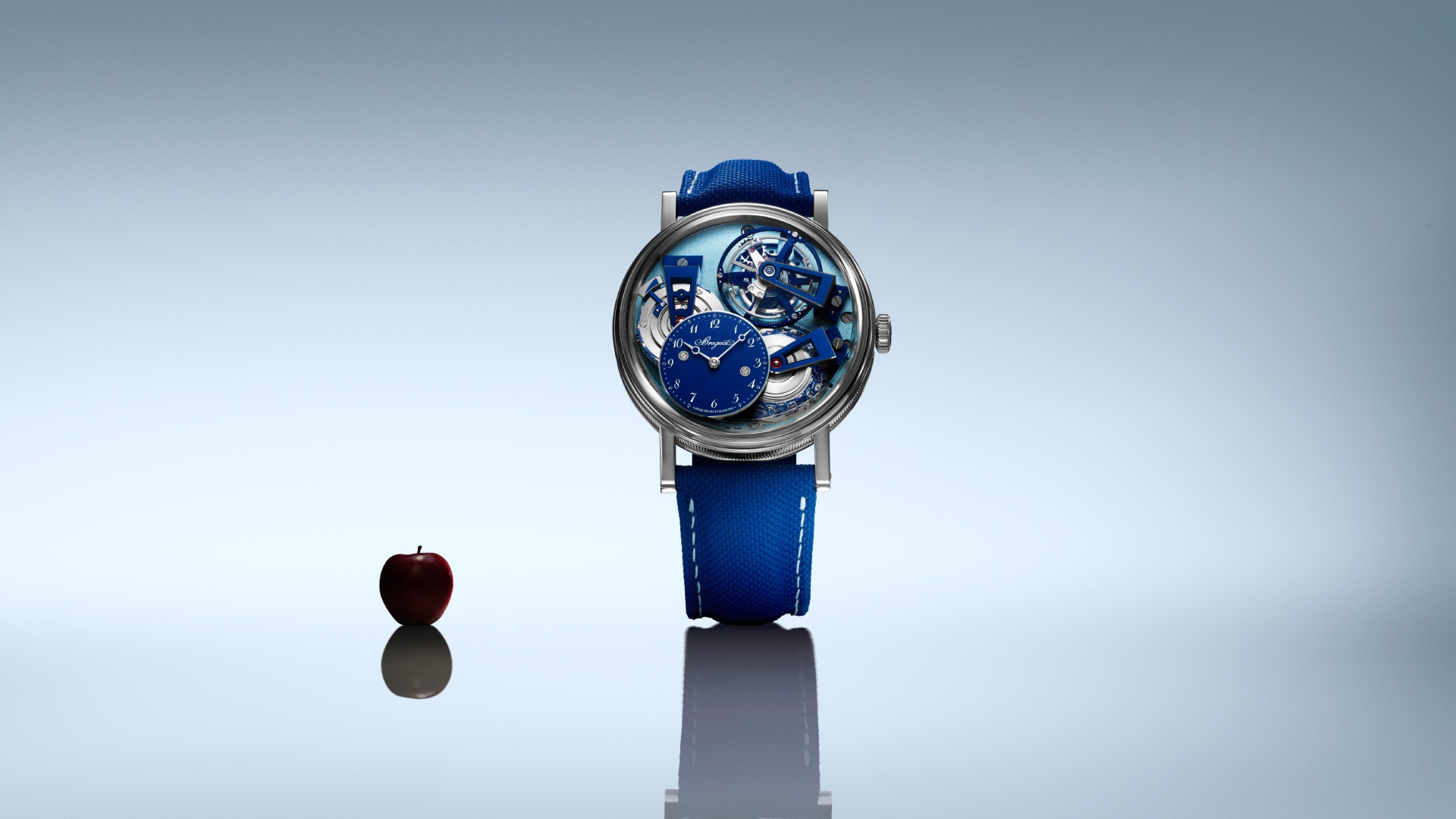
Rendered this year in a Bleu de France finish across the dial, bridges and even the tiny chain itself, it is a watch that puts its engineering on open display, skeletonised almost entirely down to the moving parts.
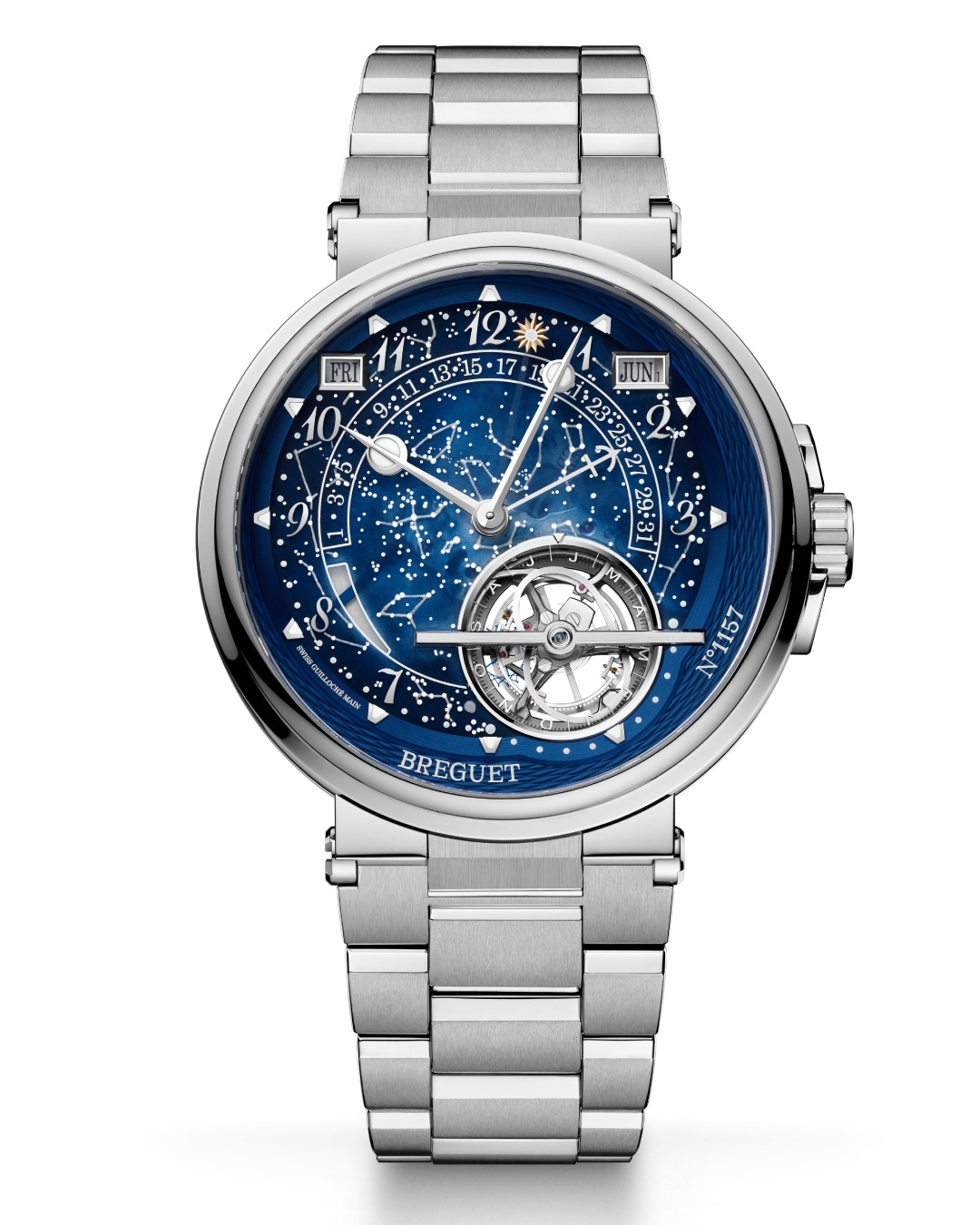
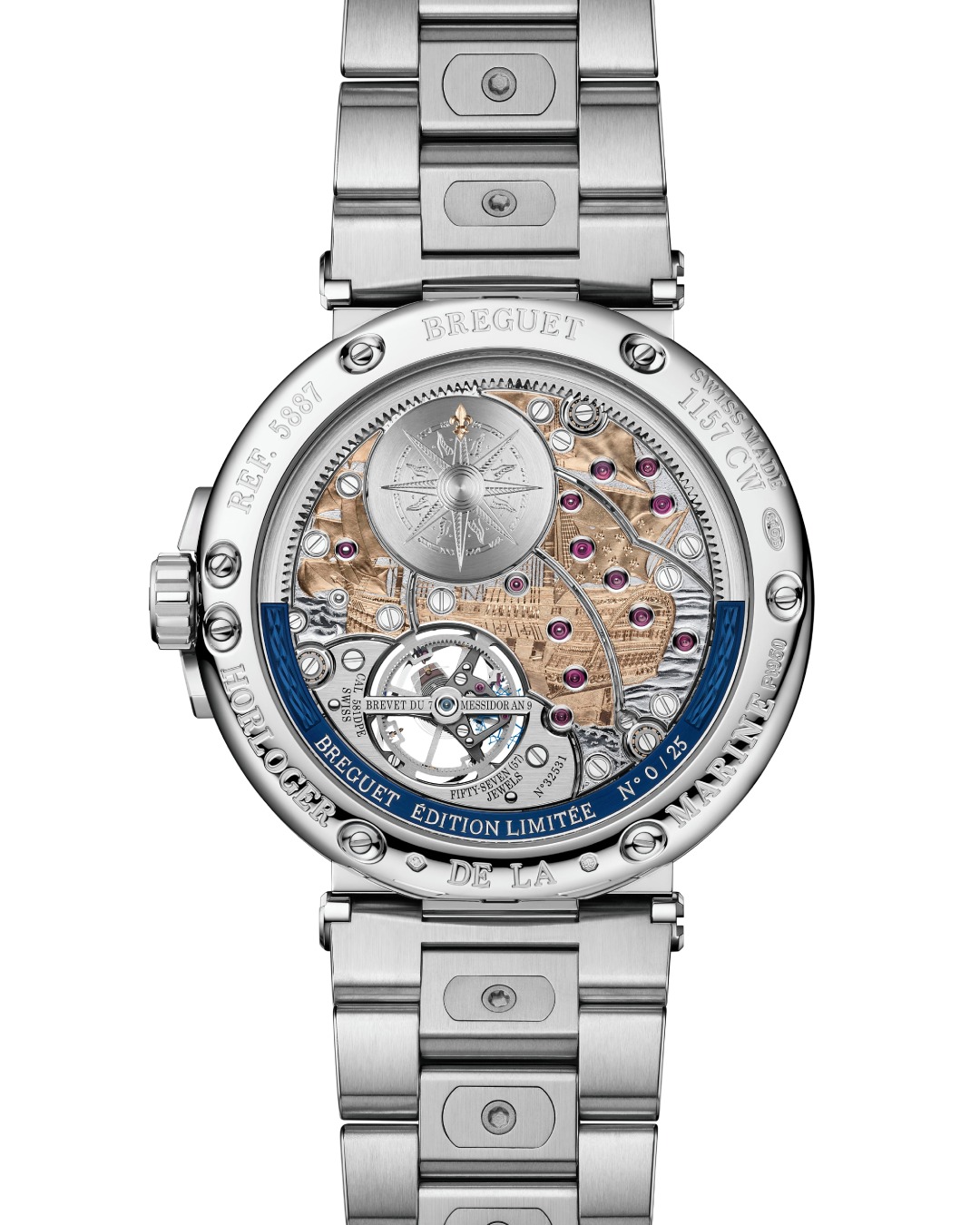
More ambitious still is the Marine Tourbillon Équation Marchante 5887, which layers the tourbillon beneath a perpetual calendar and a running equation of time, the complication that tracks the gap between clock time and the sun’s actual position in the sky.
This edition’s dial recreates, in hand-painted luminescent enamel, the exact night sky over Paris at midnight on 26 June 1801, the moment the tourbillon patent was granted, and can be personalised to show the sky above any place and date the owner chooses.
Together, this quintet of timepieces commemorate Breguet’s most enduring complication with finesse and imagination, while addressing the same original question Breguet posed in 1801: how does a watch stay honest with itself while the world changes around it? Two hundred and twenty-five years on, Breguet is still finding new ways to answer it.